Inside the program that put Native Alaska kids on skis — and sent some of them to compete on the world stage.
By Deborah Schildt · Piksik Productions · 2015
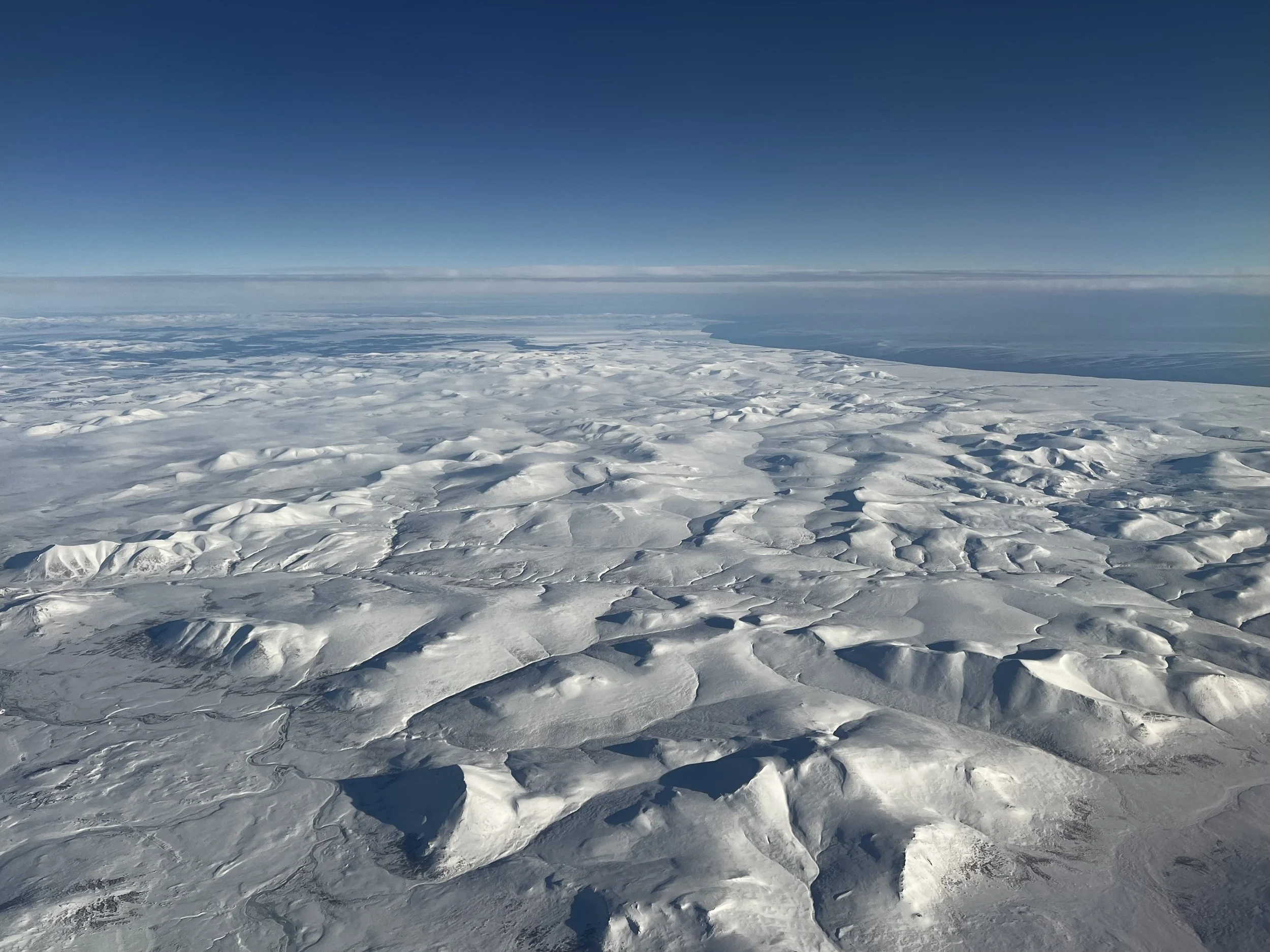
Flying into Nome — the tundra meets the frozen Bering Sea at the edge of the world.
He crossed the finish line breathing hard, cheeks flushed from the cold, poles still in his hands. He was twelve years old and had just finished a biathlon event — skiing and shooting — on one of the finest cross-country courses in Alaska. I was waiting at the finish with a camera and questions. I asked him how was his race? What made the biggest impression?
A pause that spread into a broad smile. "The trees," he said.
Not the race. Not the rifles. Not the crowd or the competition or the feeling of crossing a finish line. The trees. He was from St. Lawrence Island — a remote island in the middle of the Bering Sea, a treeless landscape, open in every direction as far as you can see. He had never seen trees before. And here he was, skiing through a forest of them.
I've been on a lot of shoots over the years. It is moments like this that stay with me — unexpected experiences with impacts beyond the final product, moments that shift the way I see the world and my place in it.
· · ·The film was called Making Tracks, and I was a field producer on it as part of my work at Piksik — NANA Corporation's film production company, based in Anchorage. NANA is one of the thirteen regional Alaska Native corporations, representing the Iñupiat people of Northwest Alaska. Working at Piksik meant working from the inside. These weren't stories we were parachuting into. They were stories we had a stake in telling well.
The subject was Nananordic — a ski program that had been quietly doing extraordinary work in the NANA region for decades. The idea was simple and, given the landscape, so obvious: take equipment into remote villages and teach Native kids how to cross-country ski. The Bering Strait School District, which serves the region, is the only place in the United States where biathlon and cross-country skiing have both been school activities for nearly forty years. It started in the late 1970s, when a young educator named John Miles came from the East Coast armed with a stack of used cross-country skis and built a program from scratch in villages that had no television, no telephones, and no gymnasiums. He cared. He got to know the kids and their communities. He learned their names and remembered them.
"Cross-country skiing was the only school sport then — and continues to be a fitting activity for places with snow on the ground eight months of the year, and for a people whose survival traditionally depended on close acquaintance with the land."
These weren't kids being introduced to a foreign sport. In some deep way, moving through a winter landscape efficiently, reading the terrain, managing cold and distance — that was already in their knowledge banks. The skis just gave it a new form. John Miles knew this. He told us that taking these kids outside — onto the land they already knew — he could reach them in ways a classroom never could.
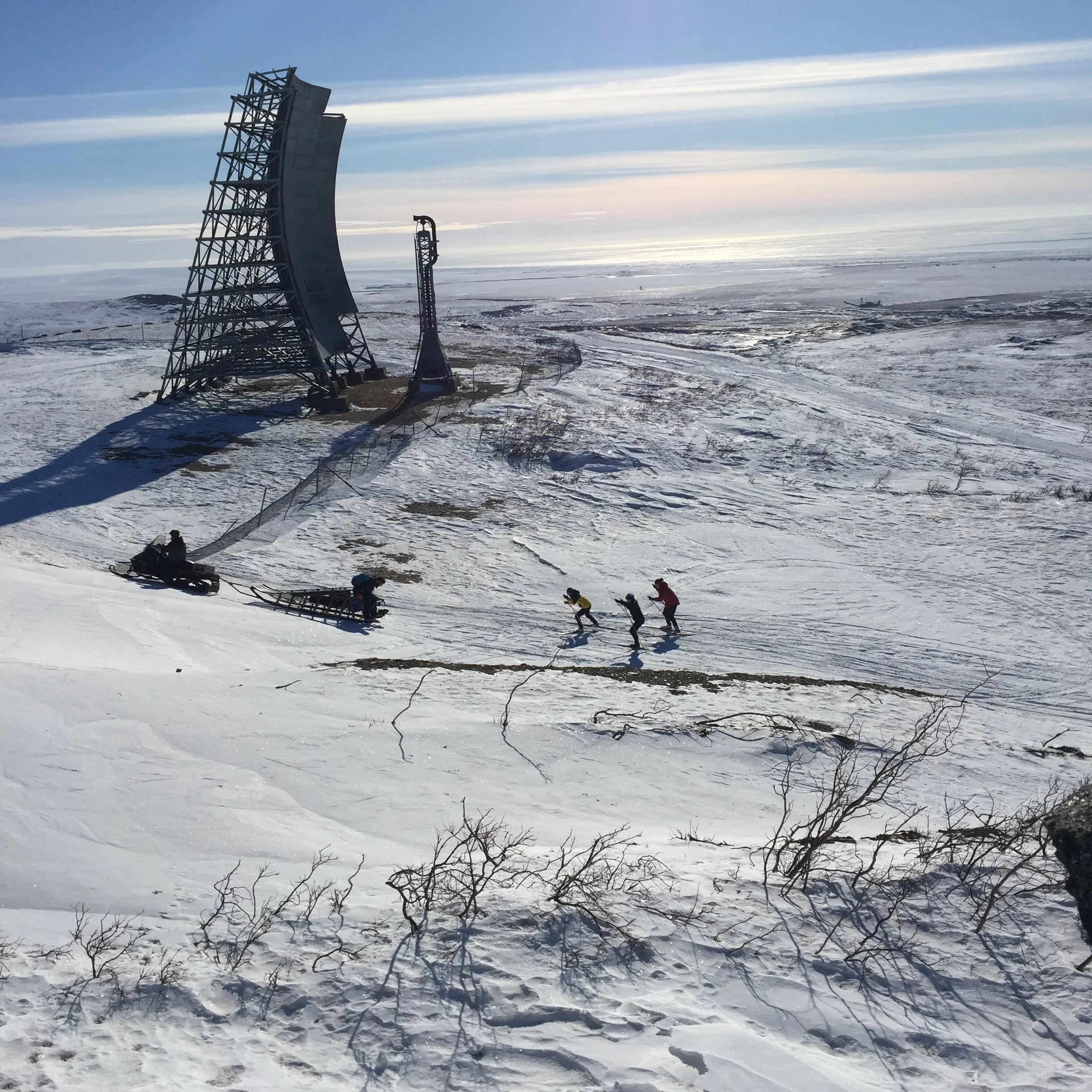
Filming skiers from the back of a freight sled pulled by a snow machine, at the abandoned White Alice facility above Nome.
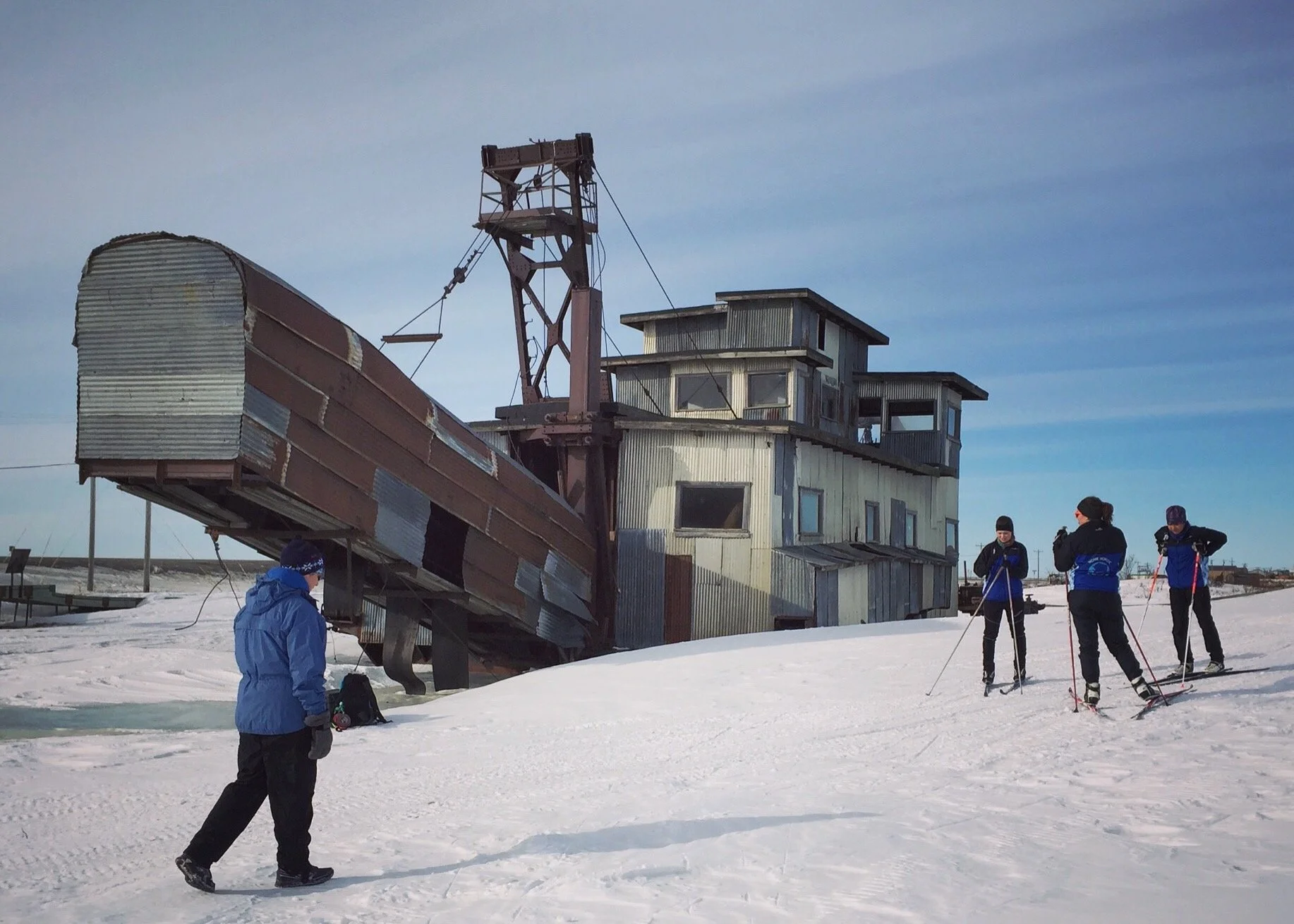
Setting up to film skiers in front of an old dredge south of Nome.
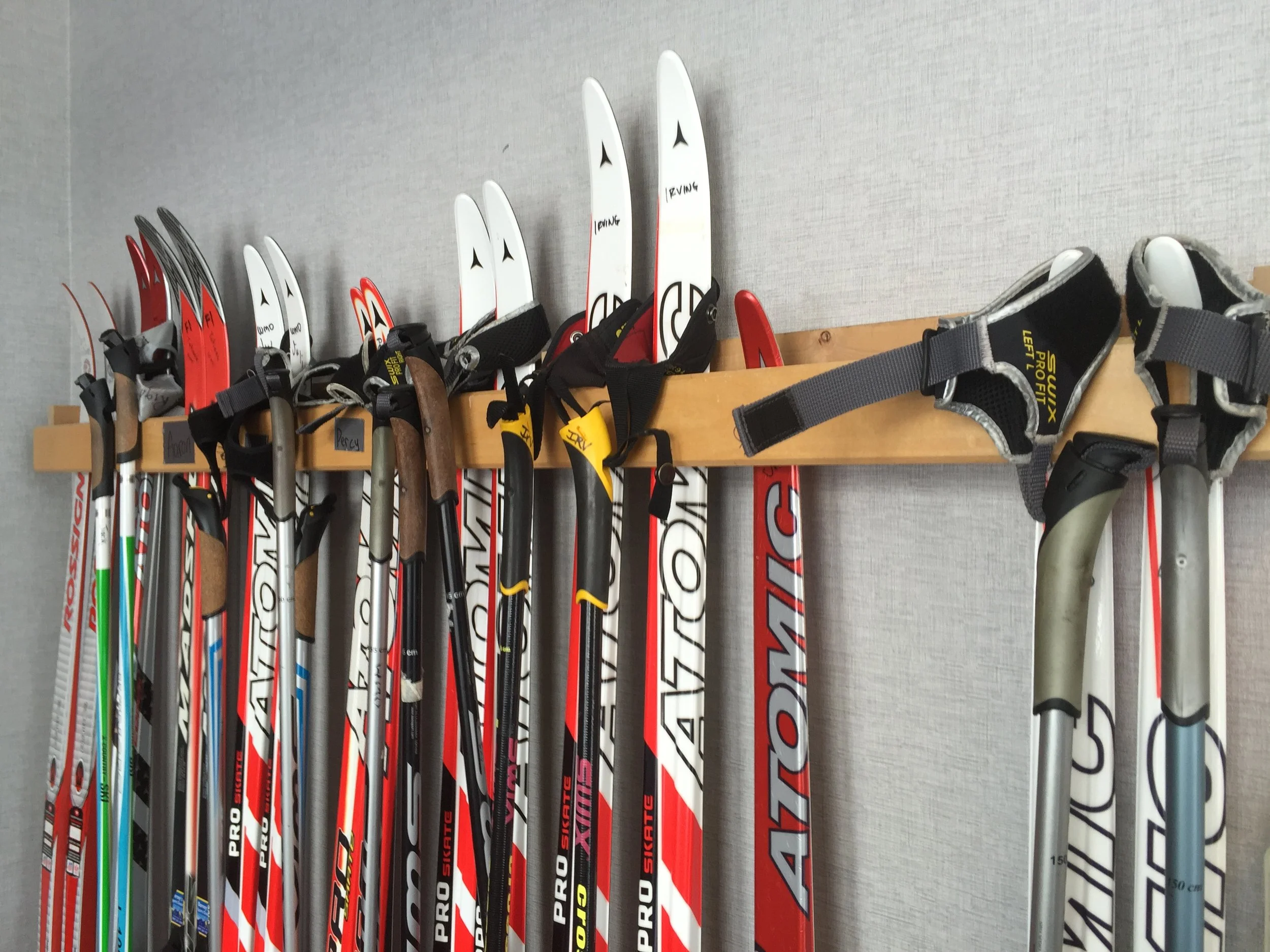
Skis rest on a rack in White Mountain.
We filmed across the NANA region, but one location stands apart in my memory: White Mountain. It's a small village on the Fish River, not far from Nome, and it sits at the center of something remarkable — a world-class cross-country ski course. Not "world-class for rural Alaska." World-class, full stop. The terrain is ideal, the trails are maintained with real care, and the community has built something there that most people in the Lower 48 will never know exists.
Watching kids race that course — kids who had grown up on this land, whose grandparents had moved across similar terrain to survive — was one of those moments where the camera is inadequate. You're pointing it at something larger than what the frame can hold.
Some of those kids went on to compete at the international level. They didn't just learn to ski. They excelled. They represented their communities, their culture, their region on a stage that had never seen them before.
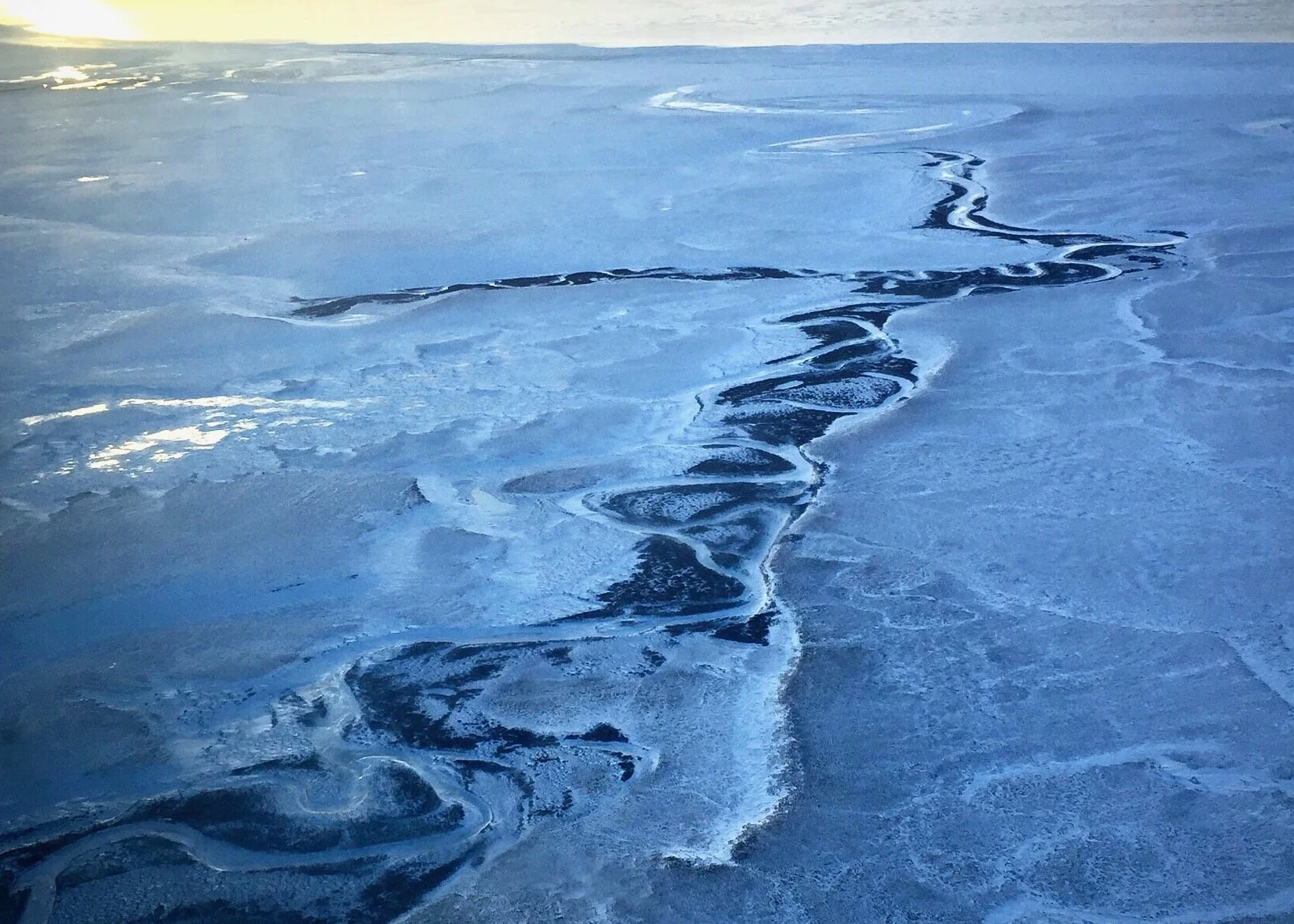
Flying into White Mountain.
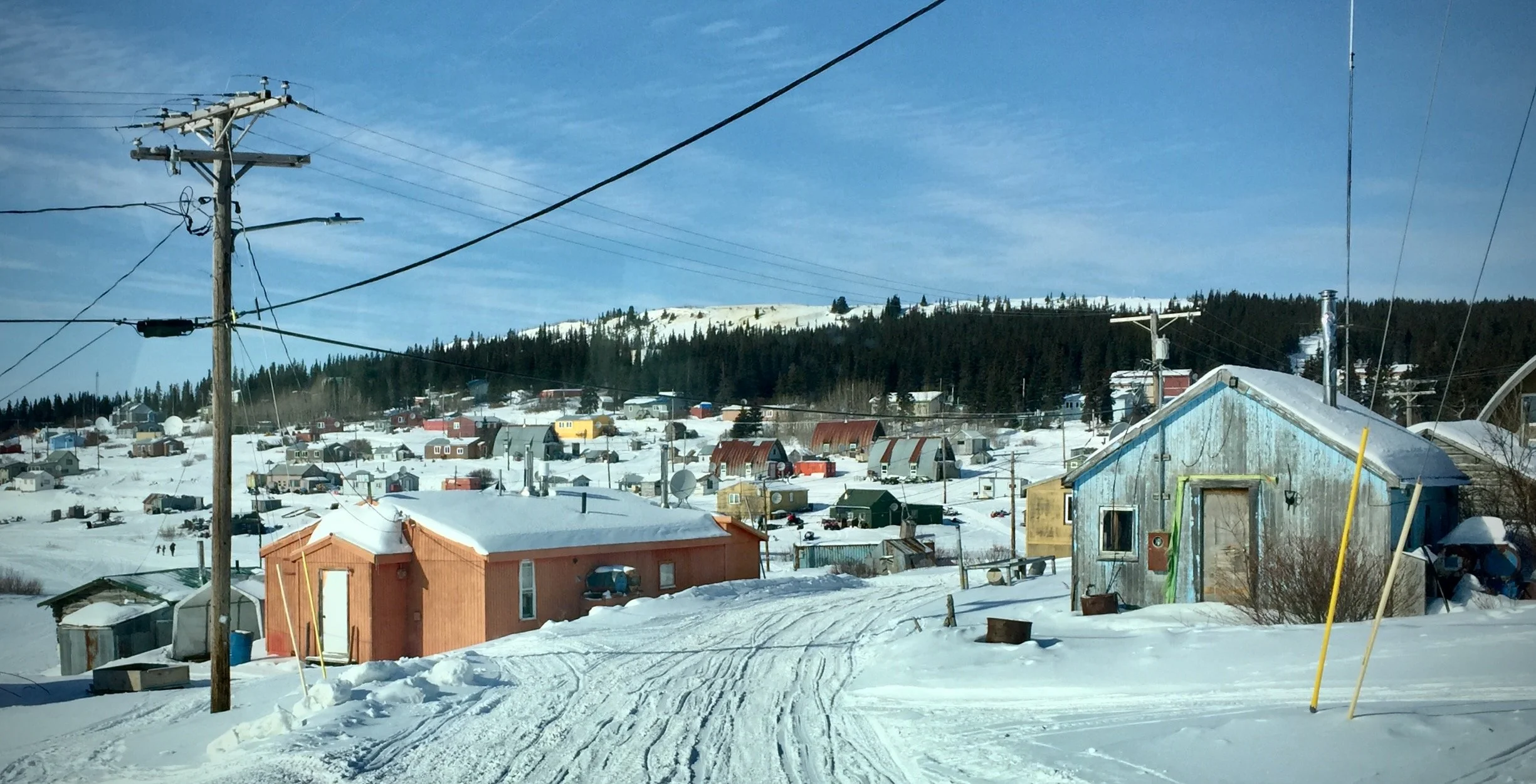
The village of White Mountain.
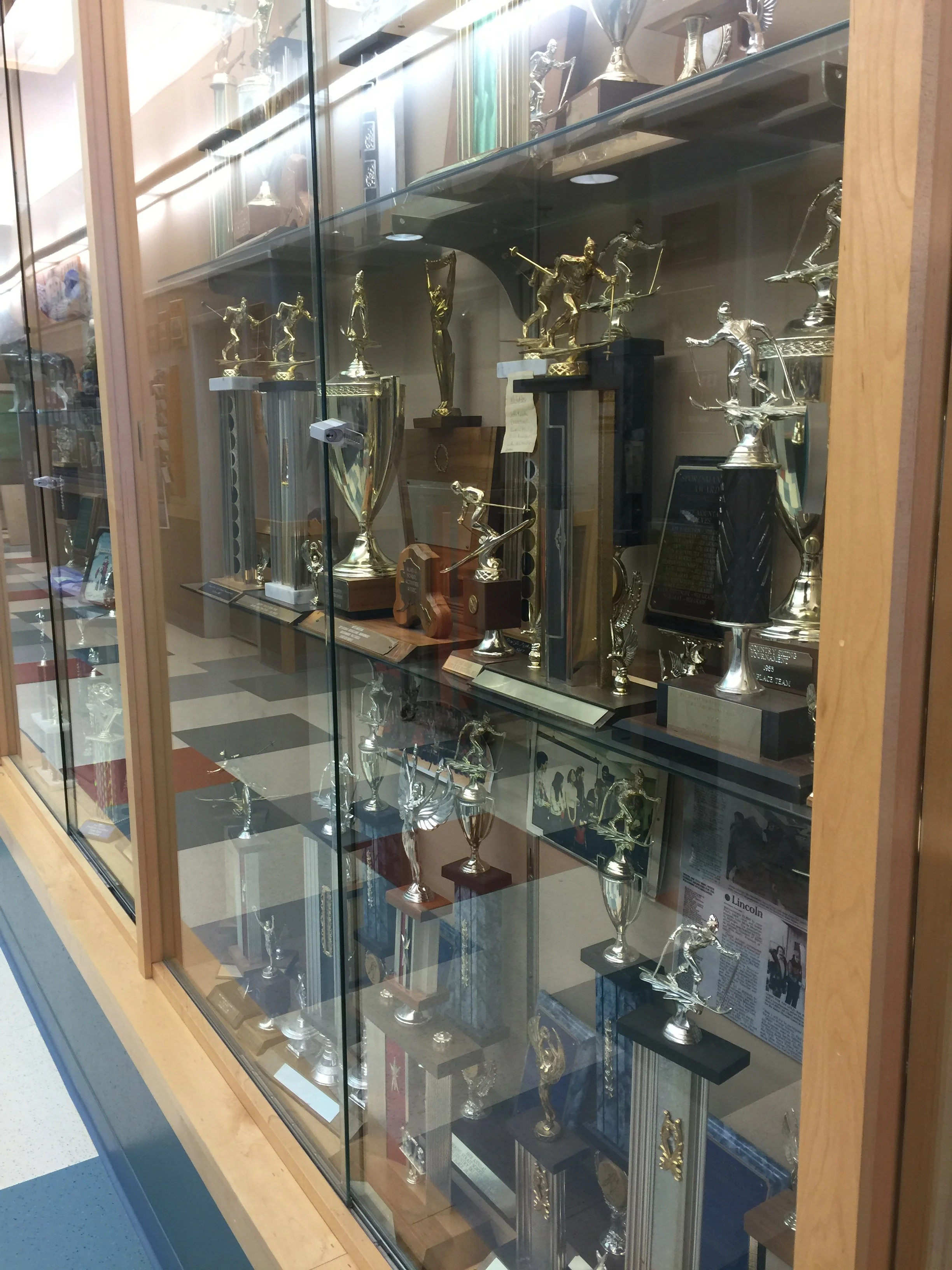
Forty years of hardware. The trophy case at White Mountain speaks for itself.
I think about that boy from St. Lawrence Island sometimes when I'm deep in a project and the work feels routine. There's a version of documentary filmmaking that is about finding drama — conflict, crisis, resolution. And then there's the version that's about bearing witness to something quietly extraordinary. Making Tracks was the second kind.
A twelve-year-old from a treeless island in the Bering Sea skied through a forest for the first time and it stopped him in his tracks. The race faded. The competition faded. What remained was wonder. Pure, uncomplicated wonder at a world that had just gotten bigger.
That's what a good film tries to do too, if you're lucky.
Making Tracks is available to view on YouTube. If you want to see the kids, the course, and White Mountain for yourself — it's worth an hour of your time.
https://youtu.be/AI7c3BrBIWE
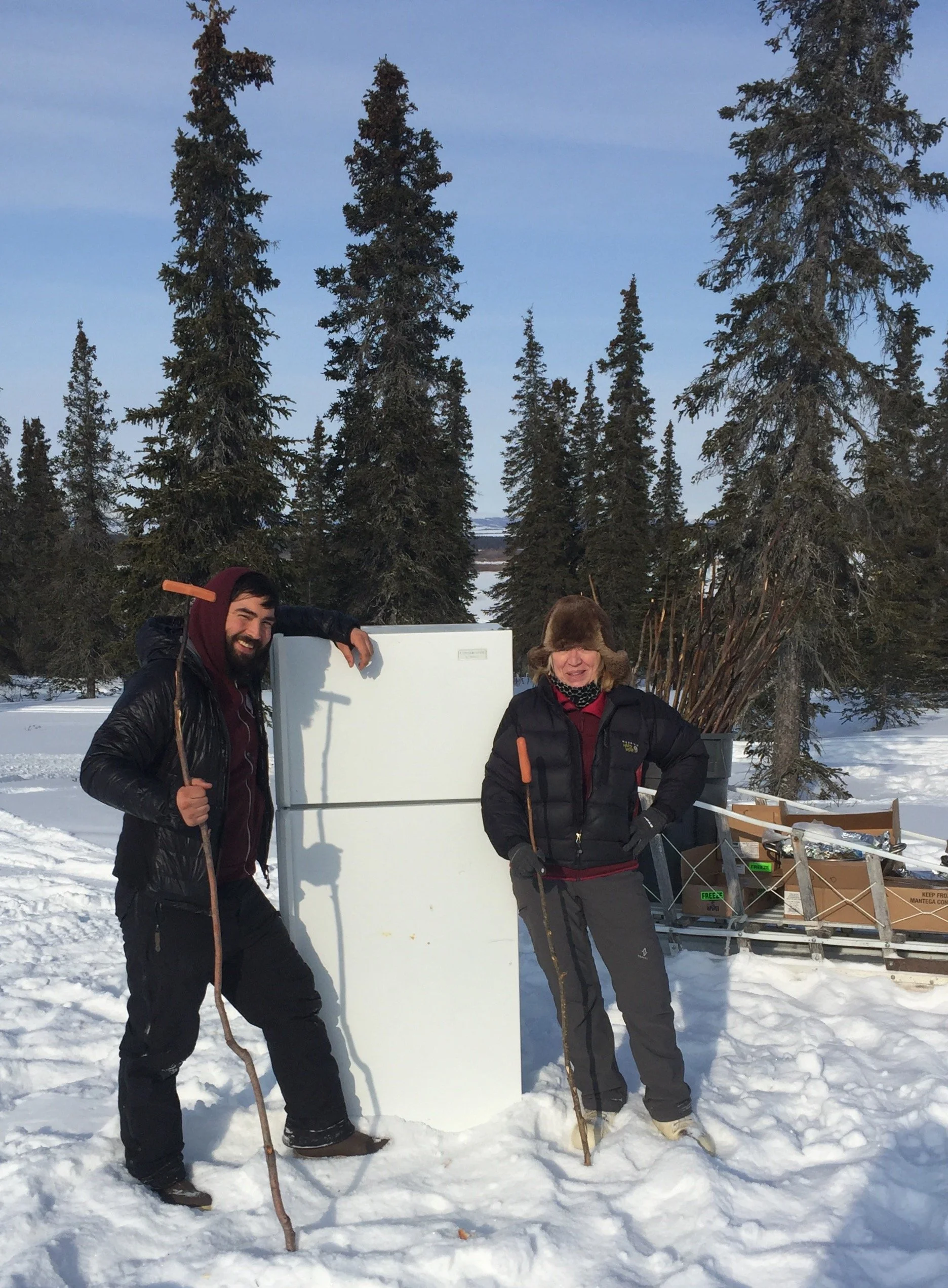
Lunch on set in White Mountain.